a family archive
Esther Shafer Katz
& Mordechai Hirsch Marmelstein
I. Foreword: Near-Certain, or Probably
If there's one thing I regret deeply, it's that I never asked my parents about their past.
I grew up in a house where speaking about the past was almost taboo — especially "the secret" of my father's past.
I decided to answer my daughter Nitzan's request — she had urged me to write down everything I know about my family, so that something would be written about our past. I chose the title so I wouldn't have to keep adding, in parentheses, "near-certain" or "probably." There are things my mother told me that I remember clearly, and there are things I pieced together through connections and inferences — and those are the "probably."
II. Esther: A Village Called Tieshka
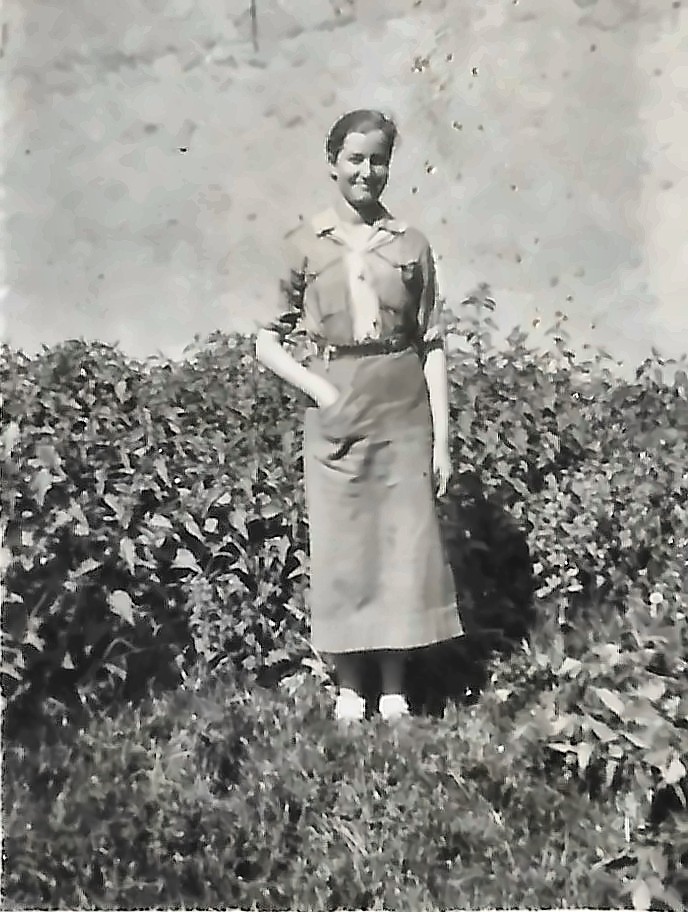
Esther Shafer Katz was born in a small village in Czechoslovakia called Tieshka.
The story of her birth: her father was drafted into the army in the First World War. Nothing was heard from him, and after four years, a man was seen coming down from the mountains toward the village — it was Simcha Shloima, who had managed to survive. My mother was the result of his return. After her, her younger brother Meir was born, and their mother died after the birth. My mother was orphaned at seven (probably). At home there were two older sisters — Feige (Yona), who was already married and had two sons, Mendo and Sander; another sister, Sarah; and, as mentioned, Esther and Meir.
My grandmother made her living from a small dry-goods shop, and my grandfather was a scholar who studied Torah and Talmud all day.
My mother was very attached to him and admired him. She said he was one of the "Lamed-Vav" — the thirty-six hidden righteous ones of Jewish legend.
From the moment she was orphaned, she passed from family to family, among relatives who raised her. That is all I know of her childhood.
III. The Archive
I'm jumping ahead in time. When my parents arrived with my brother at Kibbutz HaOgen after the war, my mother asked her sister Sarah whether she had any contact with their father, or with their sister Yona. The answer was no. When Sarah died at 93 — about seven years after my mother, who died at 86 — a whole archive of correspondence and documents came to light. My cousins Rafi, Meir, and Tamar gave it to the archive at Kibbutz Lohamei HaGeta'ot, the Ghetto Fighters' House, in exchange for translations from Yiddish and Hungarian, and perhaps another language too. It isn't clear to me why Sarah never shared this with my mother. I find it hard to believe she forgot, since she was lucid until her final day. I can't describe the emotion I felt when my cousin Meir told me the correspondence had been found among my aunt's belongings after her death. Meir told me the letters needed translating, and I offered to help. After he handed over the documents, contact between us broke off without explanation — I was never told what the letters said, and the close bond between us was severed. I turned to the archive myself, and the curator, Ella Kleiner, translated for me the passages concerning my mother and her family. At some point I asked for more; Meir forbade any further sharing, and Ella had to stop, in light of a contract between the archive and the Tamir family. From the documents I learned several important facts. I will quote them exactly as written.
IV. The Letters, 1937–1941
A letter written by Feige Berkovitz, from Tosca, Ukraine, to Sarah Katz — at Hachshara, the Hehalutz group in Karnov — on 26 May 1937:
My dear sister Sarah!
I received your letter; I'm only answering now — don't think it's carelessness that made me so late. My Mande was in the hospital, running a high fever; we had a lot of trouble with him — he had a wound on his leg, thank God it's a little better now. He was three weeks in the hospital in Munkács. Last week misfortune struck again: the horses I bought from Father died, they collapsed and didn't get up. You ask about Esther — she has a good position on the street where she lives. She is no longer with the "Hashomer" union; she isn't interested in Zionism anymore. She says nothing will come of it — you can go or not go, it makes no difference. She says it's a shame, for those years, the time, the money. My own health isn't so good; I've been living apart from the old folks since autumn.
How are you? I'm sorry about what you write about your hand. Other than that, nothing new. I send you my regards, many times over. Your devoted sister, Feige Berkovitz.
Another letter, from a cousin of Sarah, Feige, and Esther, from 1939:
To: Sarah Katz, Hachshara, the "Hehalutz" group. Dear cousin.
The letter concerns an attempt to arrange citizenship papers for Sarah before a notary. For this, money is needed, along with their mother's death certificate, held in Munkács. Their brother Meir Yosef is mentioned by name too: "Esther wants the documents as well. Write to Esther and tell her to send you money if she wants you to arrange her papers. I'll write her a postcard too. She's asking about you — she wants your address."
Another letter from the same cousin, sent on 17 February 1941:
To: Sarah and Yaakov Tamir, Kibbutz HaOgen, Palestine
Dear Sarah! I read the letter you wrote to Feige, and I'm glad to read so many good things. I always remember the desperate state you were in before you left for the Land. Dear cousin, I would like to ask you to write to me more often... What are you doing, how are you, are you still at the kibbutz — tell me about your lives. Warm regards from your cousin Katz... Send me a photograph of you and Yaakov.
Another letter from that same date, from Feige Berkovitz:
My dear sister and brother-in-law!
Today I'm writing to tell you about our health — thank God we are well, and I hope the same is true for you, always. I received your lovely letter last week; I was very happy, I had waited a long time — it had been a while since I'd had any mail from you. I think, dear Sarah, that some of the letters are getting lost... (at this point in the letter, 1941, my mother's father was still part of the correspondence.) My dear sister! Please consider Esther's situation — she truly needs help. She's doing as usual; I received a package from her a few months ago. I fell while coming from Lozhanska to Tosca and broke my leg — it doesn't hurt anymore. Meir Yosef has had a fever recently. Write to me often, and more clearly too. The children are going to school. Much love and kisses, your devoted sister. Much love also from Meir Yosef and from Father. Feige.
This was the last correspondence I received from the Ghetto Fighters' House archive. It's unbelievable that contact between family members continued as late as 1941 — and that Sarah never showed this to my mother when she arrived with my father and brother after the Holocaust and the refugee camp in Germany. I don't think my mother knew what became of her sister and the rest of the family. At the time, I suggested to my mother that we search the Missing Relatives Bureau for information about her younger brother, Meir. My mother decided he had managed to escape to Communist Russia, had probably started a family there, and didn't want to be found. I let the matter rest, because I thought it was easier for her to live with the loss that way. I've also thought that if my mother hadn't grown bored with the Hehalutz movement, and had joined her sister in emigrating to the Land, she would have been saved from Auschwitz.
Source: the Ghetto Fighters' House archive. Translated from Yiddish and Hungarian by Ella Kleiner.
V. Budapest and Auschwitz
From this point on I have no information about my mother. At around sixteen or seventeen, she went to live with a wealthy family, probably in Budapest, and became the children's nanny after growing close to them — becoming almost part of the family. From there, in 1941, she was taken, along with that family and with all the Jews of Hungary, to the death camp at Auschwitz.
My mother told me two stories from the camp. She was in line for Mengele's selection — last in line, and quite ill. The Jewish kapo standing there pushed her to the right, and by doing so, saved her life.
The second: my mother told me that as part of the work in the camp, the Jewish women were taken to weld parts for the Nazis' airplanes — of course, without protective goggles. Every day the women would go out to the factory to work, and return to the camp at the end of the day. By the end of her life she barely needed glasses at all. She told me this story when I was fourteen and had to get glasses myself, to her dismay. She said there were two things she had sworn to herself in her youth: never to be a second wife, and never to marry a man who wore glasses. On that count, she didn't succeed.
One Saturday, early in the morning, I watched a documentary about an Israeli woman who had sworn to her mother, before she died, that she would search for her grandfather's tar factory — he had been very wealthy, and it had been nationalized by the Nazis — and also search for the rest of his considerable property in Poland. After a long search, the woman arrived at a used-car workshop belonging to a Pole, on the outskirts of the Auschwitz camp. To make a long story short: this was the very place where my mother and the other women had welded the airplane parts. That astonishing confirmation, that testimony — a voice from the past — shook me deeply. Another confirmation about my mother came when I filed a claim on her behalf with the Swiss fund for forced laborers, with approximate dates, and my mother received a one-time grant of $1,500 for welding airplanes as a forced laborer.
VI. What the War Left
My mother was saved thanks to the Russians. In our house there was always an argument over who was better — the Americans, who liberated my father from the death march, or the Russians. My father was on the death march; he was sick with typhus, and his condition was very bad. A short, weak man dragged him along too, and by doing so saved his life. That man turned out to be a clerk at the Netanya municipality, whom I later met and was astonished to recognize. My father was a strong man, relatively tall for his generation, and the clerk was quite short — yet he had rescued my father with his own depleted strength.
In the course of her wanderings and searches — probably for her family — my mother arrived at a bombed-out building in Budapest, on Kazinczy Street 10, behind the Great Synagogue, and lived there. Jewish refugees simply moved in and lived there when they found no family, or faced any other tragedy. My mother didn't know what had happened to any of her family: her eldest sister and her two children, her father, her brother Meir Yosef, and all the rest of the cousins. She only knew that her sister Sarah, about seven years older than her, had immigrated to the Land before the war with her partner Yaakov, as part of the Hashomer Hatzair Hachshara, and had been saved — and that there had been no contact between them. At some point she told me that her father had gone to live with his sister in Poland and had probably died of illness. In that same building she met my father — and that story will be told later. The letters found among my aunt Sarah's things, which revealed a little of my mother's life and stood as testimony to her family before they were murdered, are, in my eyes, nothing less than theft — a piece of life stolen from her by her own sister. It is simply terrible, to my mind.
My cousin Meir also told me that my grandfather had begged Sarah and Yaakov to marry properly, according to Jewish law. After Sarah's death, a ketubah — a Jewish marriage contract — was found, testifying that she had complied with her father's wish.
When I was finishing high school, my mother asked me to travel with her to Tel Aviv to visit a Hungarian lady — it turned out to be the very woman with whom my mother had lived. As far as I understood, she was now alone. I remember well the expression on my mother's face, and her body language — they reflected pride, that she had children, and, at the same time, a kind of embarrassment.
When my firstborn son, Tal, was born, my mother asked only one thing of me: don't ask me to stay alone with a baby, and don't ask me why. I didn't ask.
VII. Mordechai: Olyanovo and the Furrier's Trade
My father was born in a village at the foot of the Carpathian mountains, called Oliyena, or Olyanovo as it's known today. His father traded in mineral water, and the family was probably well-off. He was the third of four sons, and perhaps two more sisters. He was different in appearance and in character — relatively tall, with darker coloring than his shorter, fairer brothers. He was, it seems, rebellious, with aggressive tendencies. Since he was the clever one in the family, his father intended him to become a rabbi. Plans were one thing, execution another: instead of studying in the great city of Prague, he spent much of his time out enjoying himself. When his father found out, he declared: if not a rabbi, then a trade. My father didn't get along with his father, and loved his mother — for whom I am named — with all his soul. He was sent to Prague to study furriery. The journey to Prague and back took three days, so he came home only twice a year, or once.
He may have been sixteen. They arranged a foster family for him, and so he became an apprentice to the owner of a furrier's workshop. By his own account, he caroused a great deal, drank, went out to places of entertainment, danced, and enjoyed life.
It was the furriery itself that he told me about. How he learned from his boss to work the mink furs that women bought: before sewing the coat, they would wet the fur and stretch it over a board with small nails, and in that way gain extra fur from it — which they would use for other wealthy women, for instance to sew hand-warmers against the cold. Sometimes they even sold the extra fur back to the very woman who had brought in her own mink.
Another story about my father's temperament: once, walking down the street in his village, he heard a young man mention the name of his beloved sister. He immediately beat him for the mere mention of her name.
VIII. Frida, Moshe, and David
At nineteen or twenty he married Frida Berkovitz, a woman he loved with a wild love — and when they first refused him, he threatened to kill himself if he wasn't allowed to marry her. They moved to live in Chust, where my father had a furrier's workshop.
They had two sons. I only learned the boys' names after my father's death, when my mother wrote them on his headstone: Moshe and David. About his first marriage, he told me that the love before a marriage is not the same as the love after it. I understood that Frida, his first wife, stayed home and raised the boys, while my father continued to go out — though less than before.
My father and his eldest brother, Sander, were taken to forced-labor camps by the Nazis, and they laid railway tracks bound for Russia. Zalman was conscripted into some unit by the Russians and served in their army. My uncle, the youngest brother, was not taken, and I don't know where he was.
All the women — the sisters and the sisters-in-law — returned with the children to the house in Olyanovo. The Germans forced all the Jews to return to their place of birth, so that the population registry would be up to date.
The eldest brother, Sander, had four children; Zalman had three; my father had two; and I don't know how many children the sisters had.
One night, when my father and Sander were laying track very close to their parents' house, the Jewish wife of the officer in charge — who did not identify herself as Jewish — looked the other way and let them slip home. Among other things, the result was that Frida became pregnant. My father told me that his wife, thanks to her pregnant belly, managed to smuggle bread to all the women and children.
When my father was liberated from the death march and returned to the house where all the women of the family had been staying, a neighbor told him that, right near the end of the war, the Germans had loaded all the women, the children, and his mother onto a truck, toward their end. The neighbor gave my father the photographs of his wife Frida and his sons Moshe and David, who were probably about nine and seven (not certain). He was also told that his wife Frida had been brave, and had managed to smuggle a loaf of bread inside her pregnant belly.
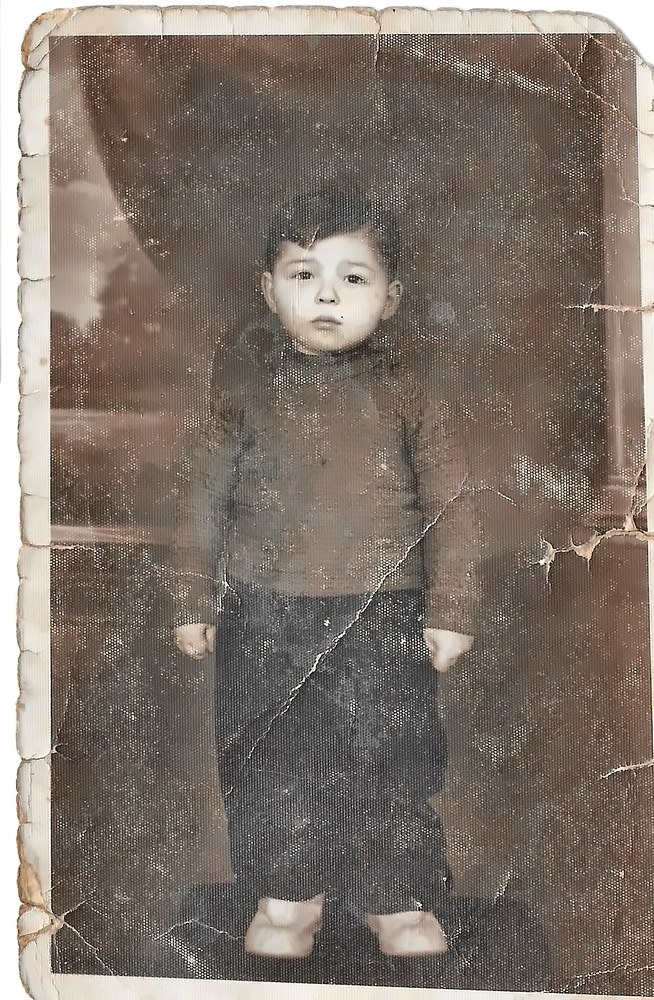
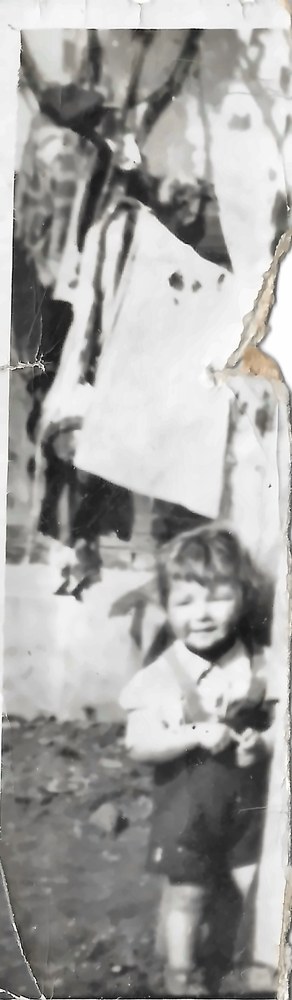
At some point, as an adult, I studied photography, and I asked my father's permission to photograph the boys. He burst out, demanding to know why I hadn't spoken of this before. Being a grown woman by then, I could bear the accusation, and I answered him: you never allowed anyone to speak of it, all these years. The regime of secrecy was so heavy that even then, I didn't go on asking about the boys.
My father went back to Munkács, to his furrier's workshop, glad to see that his old Czech apprentice was running it. The man threw him out: "Get out of here, you stinking Jew, before I turn you in to the authorities."
IX. Two Survivors Meet
In the course of his wanderings, he arrived at the bombed-out building in Budapest, on Kazinczy Street 10.
There he saw my mother — a tall, beautiful, blonde woman with blue eyes, still gaunt from the camps, but less so since her liberation. For half a year they passed each other on the stairs of the building, until my father summoned the courage to approach her. He proposed marriage to her, in these words (or so I was told, at least): "We're both alone, and I like you.... so..."
By some kind of miracle, my mother became pregnant with my brother (both of them were still emaciated from the liberation). They decided to go back to Prague, where his brother Zalman had remarried — to Irene — and they had two children, Chaya and Yitzchak.
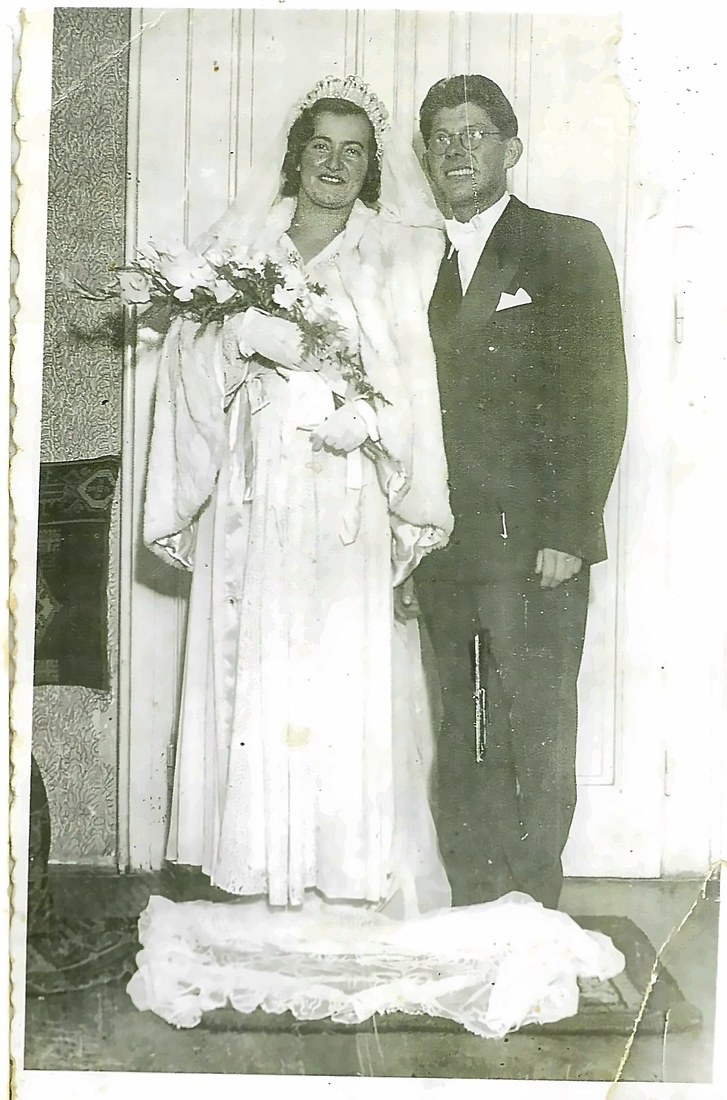
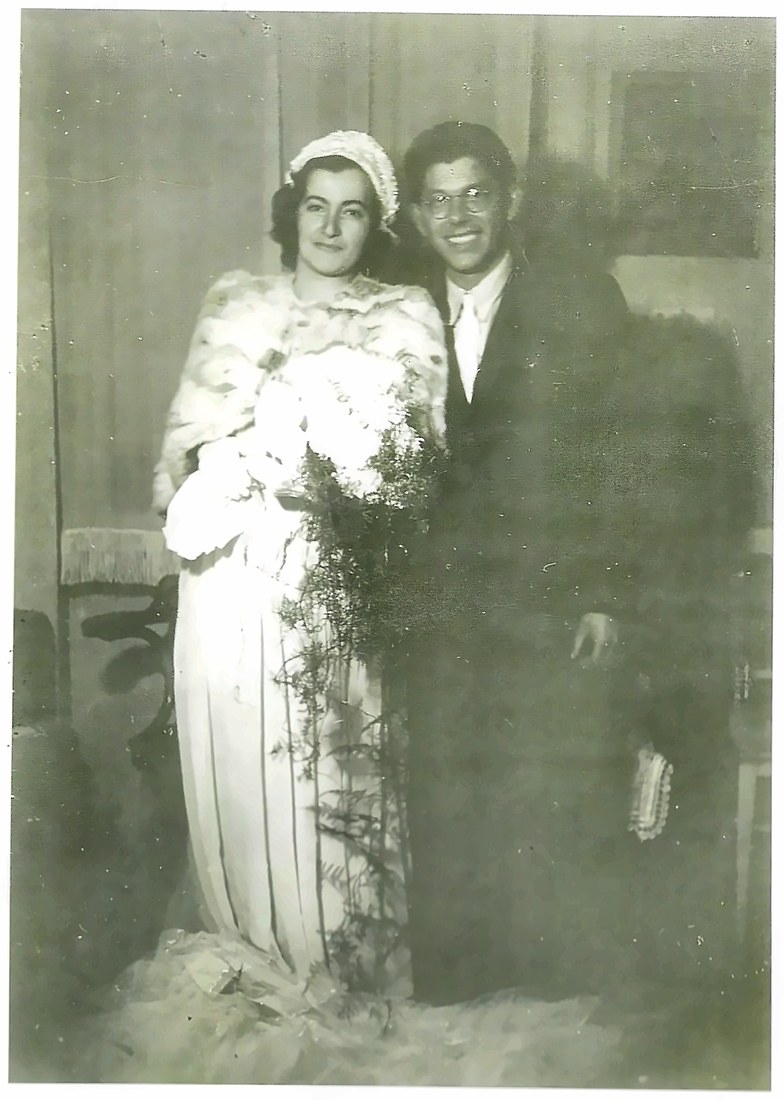
The community rabbi forced them to marry a second time, because less than a year had passed since his wife Frida had perished, and technically, he was still bound — and the son about to be born would otherwise be considered illegitimate. That's why I have two photographs of my parents' wedding. In the second photograph my mother already looks lovely, and my father rented a fur coat to dress his wife Esther — also in memory of the furriery he had loved so much. My father, too, looks better in it. All three Marmelstein brothers remarried, and the youngest brother married for the first time, to a relative named Ruchi. Sander had lost a wife and four children; Zalman, a wife and three children; and my father, as noted, a wife and two sons.
X. Bamberg: A Son Is Born
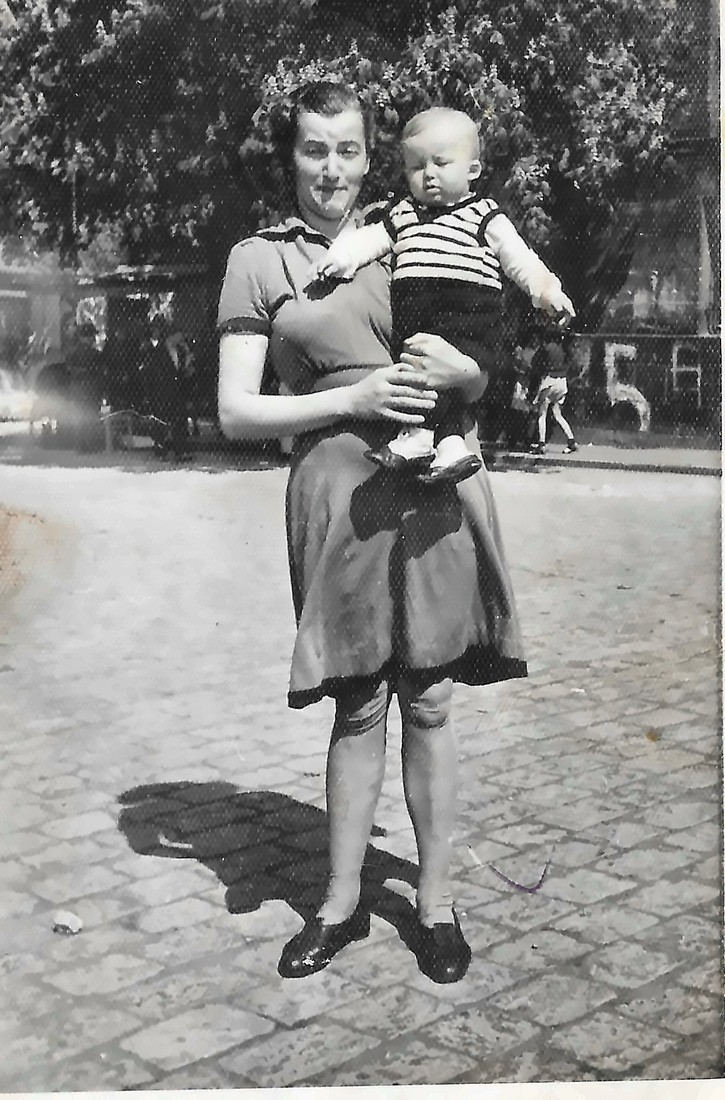
The three brothers made their way to Germany, to a UNRRA refugee camp in the city of Bamberg, where my brother was born. My mother told me there were rumors that the Germans were stealing blond babies, mainly to rebuild the Third Reich — a rumor later confirmed to me in my history studies in high school. My mother told me she suffered a "stalled labor," out of fear that they would take the baby from her. In the end, when she gave birth, the German doctor rinsed my baby brother under the tap water and asked her: "Stinking Jewess, will you bear more little Jews?" My mother told me she answered him: many. From that moment, my brother Simcha never left her arms, until they reached Israel. My father, overjoyed at the birth of a son, gave my mother the right to name the boy after her beloved father. I was named after his beloved mother, Yehudit. My grandmother's name was actually Hodaya, which my father mistakenly translated as Yehudit — the true translation would be Hadassah. Yidis means Yehudit, in Yiddish.
XI. The Road to Israel
My mother knew that her sister Sarah had immigrated to Palestine as part of "Hashomer Hatzair." Her father had died of illness, probably in Poland, after fleeing to his sister there.
Only once in Israel did my mother discover that Yona, her eldest sister's, two sons — Sander and Mendo — had survived. Mendo made his way to Israel; Sander emigrated to America. The age gap between Mendo and my mother was seven years. My mother took him in as family immediately, and I loved him very much.
My father agreed, for my mother's sake, to immigrate to Israel, so she could be reunited with her sister Sarah.
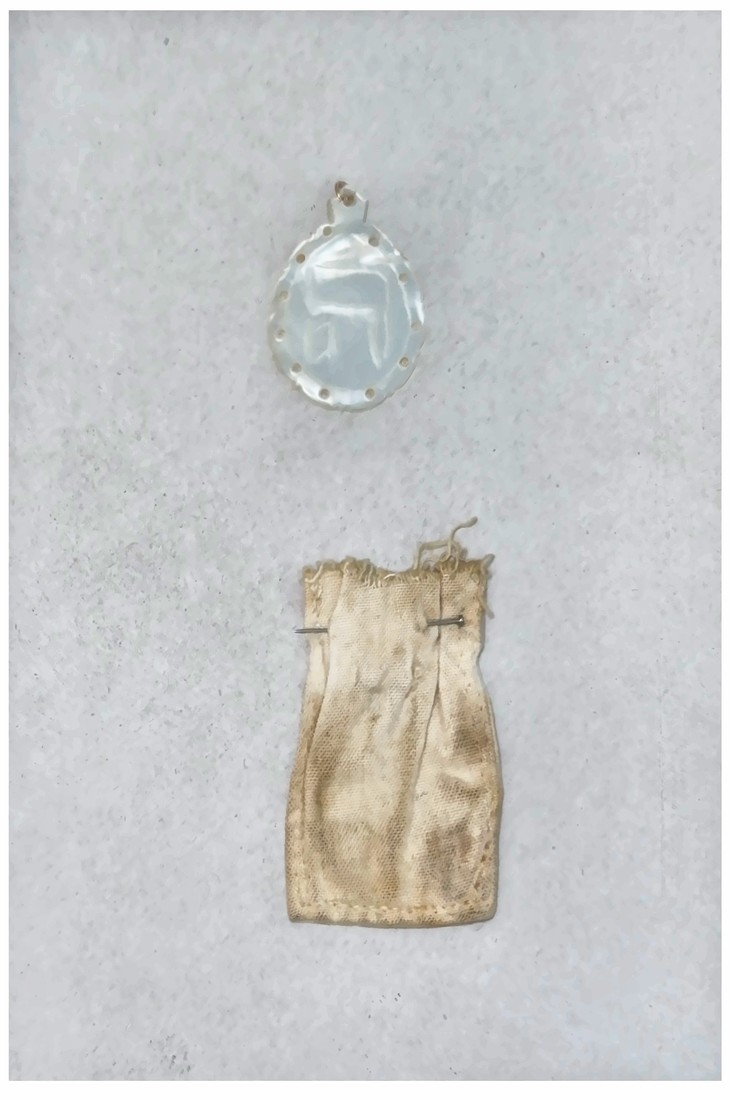
On one occasion, my mother told me that she had managed to keep a very small mother-of-pearl pendant that may have belonged to her father. In Auschwitz, she once woke from a dream in which her father told her to go to Israel — and the pendant, engraved with the letter Hei (ה) — a symbol for the name of God — was in her hand.
My father, who knew how to write in Hebrew because he had studied from the age of three in cheder, sent a detailed letter with all my mother's information to Palestine, signing it as Esther's husband. The letter reached the Missing Relatives Bureau in Tel Aviv and was posted on the notice board of the Tekam, the Kibbutz Movement Federation. My mother had apparently remembered the details of Sarah and Yaakov's Hashomer Hatzair group, and the letter was directed there.
My uncle Yaakov, who had been drafted into the Jewish Brigade, read the letter and brought it to his wife Sarah — it should be noted that he recognized my mother's details because he had known her back in Czechoslovakia. He set out on a journey to Germany to find my mother and father, a journey that took about a month, and finally found them in the camp at Bamberg. He persuaded them to immigrate to Israel.
At this stage, a dispute arose between my uncle and Sander, who wanted to emigrate to America, and my father, who wanted to immigrate to Israel because he had promised to — despite loving his younger brother, my uncle, very much. Each of them filled out forms accordingly. My uncle tore up my father's forms and filled them out for America instead, in his place. My uncle and my father met again twenty-five years later, in Israel.
When my parents delayed, Yaakov made another trip to spur them on to reach Israel. One night they traveled by truck to Marseille, and from there, by ship, reached Israel in 1947, as illegal immigrants. My mother was sick throughout the voyage, while my brother Simcha celebrated — everyone spoiled him, and he was even given food by the other passengers. He was a handsome child, blond with blue eyes, which no doubt contributed to the affection he received.
In 1946, Yaakov wrote a letter to Sarah saying he had met Esther and had also seen the child, Simcha; in another letter he notes that he would very much like to visit Esther, and wonders whether he'll manage to, hoping he will. And in yet another letter, from that same year, May 1946, he notes that he received the letter Sarah had sent for Esther and passed it along, hoping it would reach my mother. My parents arrived at the port of Haifa, and from there, almost immediately, went up to the land of Kibbutz HaOgen. Before that, they had been in the area of Beit Berl, where, to this day, there stands a sign reading "HaOgen" — the Anchor.
XII. Kibbutz HaOgen
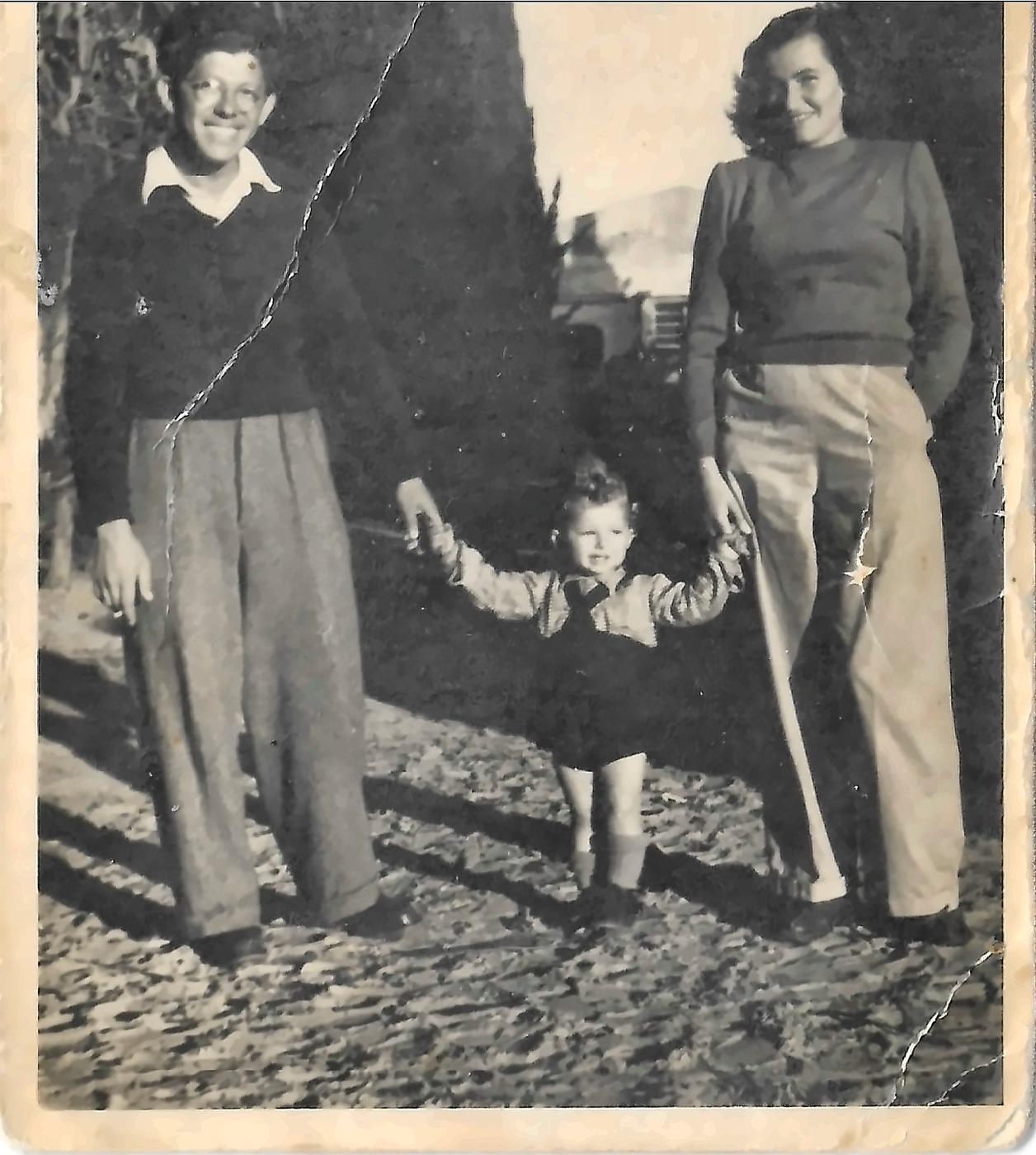
I was born at Kibbutz HaOgen, at the end of 1950. When my mother went into labor, my father ran to find a vehicle to take her to the hospital in Hadera. People hushed him, because he was disturbing the music, and in the end they arranged a truck for him. The next day, when he called to ask what his wife had had, he was told: a girl — and he burst into hysterical laughter. The nurse asked my mother: is your husband crazy?
My mother explained to her that he was simply happy. Afterward, she told him, with some worry, that I was very ugly. He answered her: never mind, we'll dress her up in jewelry and pretty clothes — the main thing is that we have a girl!
I recently learned that my father helped his brother Zalman, who had stayed in Czechoslovakia, to immigrate to Israel with his wife and their two children, Chaya and Yitzchak, and brought him to Kibbutz HaOgen.
On one occasion, when my mother went to eat in the kibbutz dining hall, she came rushing back to the room in a panic. She instructed my father to run at once to the secretary of the kibbutz economy and have them get a woman out of there — a woman my mother had identified as a kapo — warning that if anyone else recognized her, they would kill her. By the next day, the woman was gone.
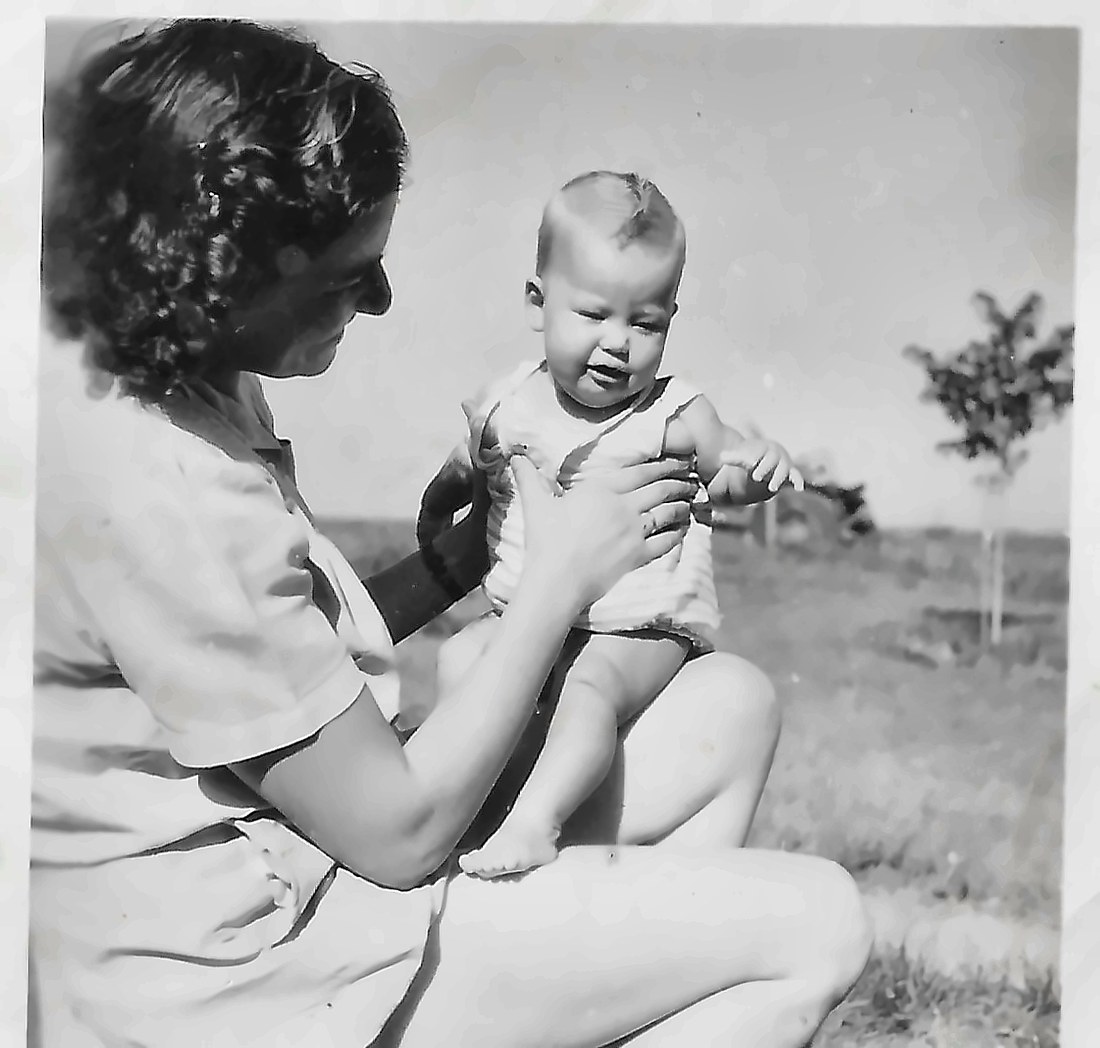
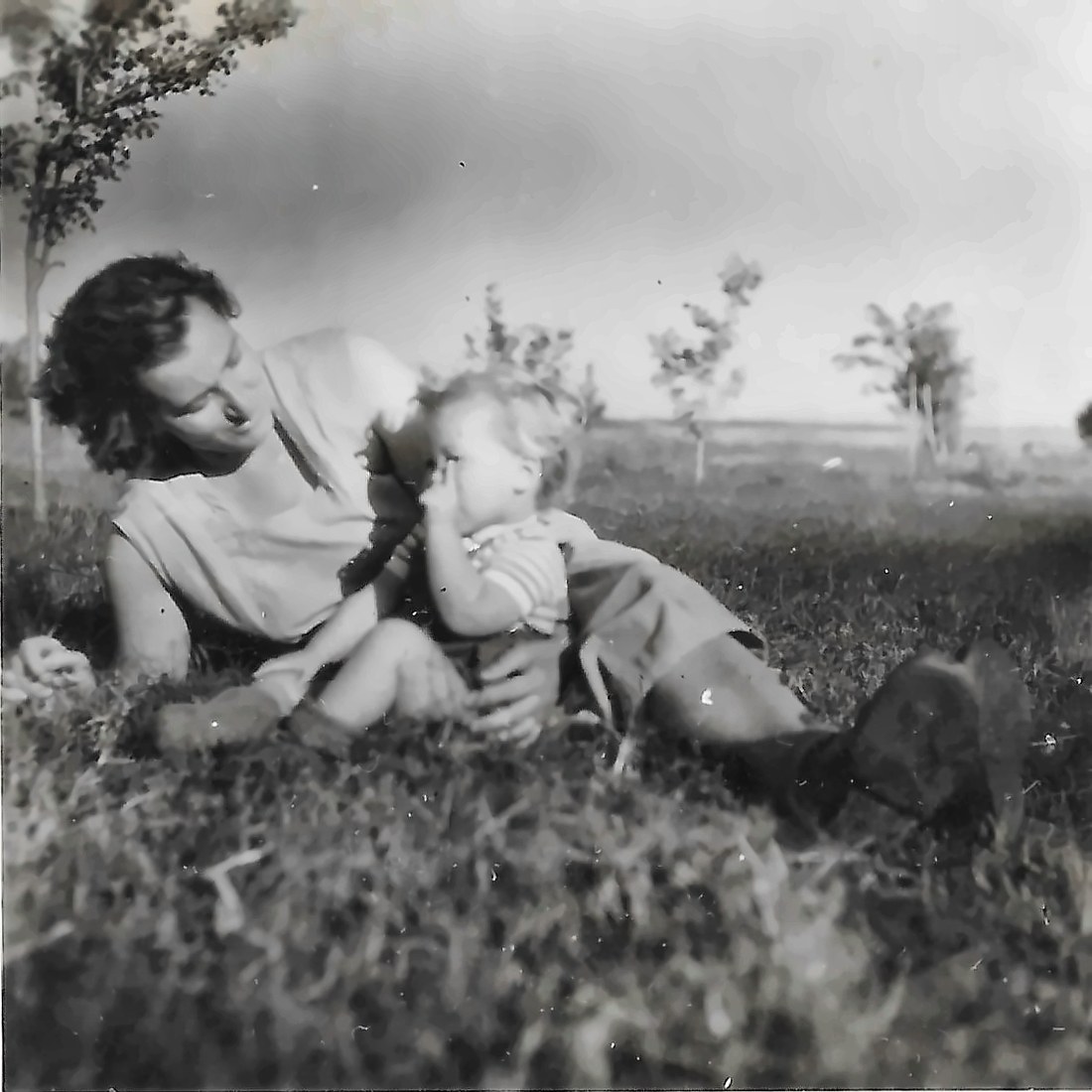
XIII. What Sarah Wouldn't Hear
My mother told me — when I asked — that she had tried to tell Sarah about what she had been through in the concentration camp, and Sarah wasn't willing to listen.
"Sarah preferred to give me face creams and tomatoes rather than hear what I went through."
I assume she didn't really tell my father much of what she went through either, mainly because of "his story." She always protected him, and was also wary of his outbursts of anger.
XIV. Esther's Final Years
Toward the end of her life, when she fell ill with dementia, I was called to the sheltered-housing home where she lived, several times, in the middle of the night. She would wander from her apartment, and they would find her hiding in the corridor, unable to explain what was happening to her.
Once, in the afternoon, when I came to visit her, she told me that the kapo was beating her half to death. I told her that whoever touched her, I would kill. She explained to me again that the woman was clever and hid in the corner, and that when I left, she would come back and beat her again. To calm her, I checked under her clothes for marks. My mother answered me that the woman knew how to hit so there would be no marks — terrible. That is the little I heard and saw about what happened to my mother in Auschwitz.
XV. On My Parents
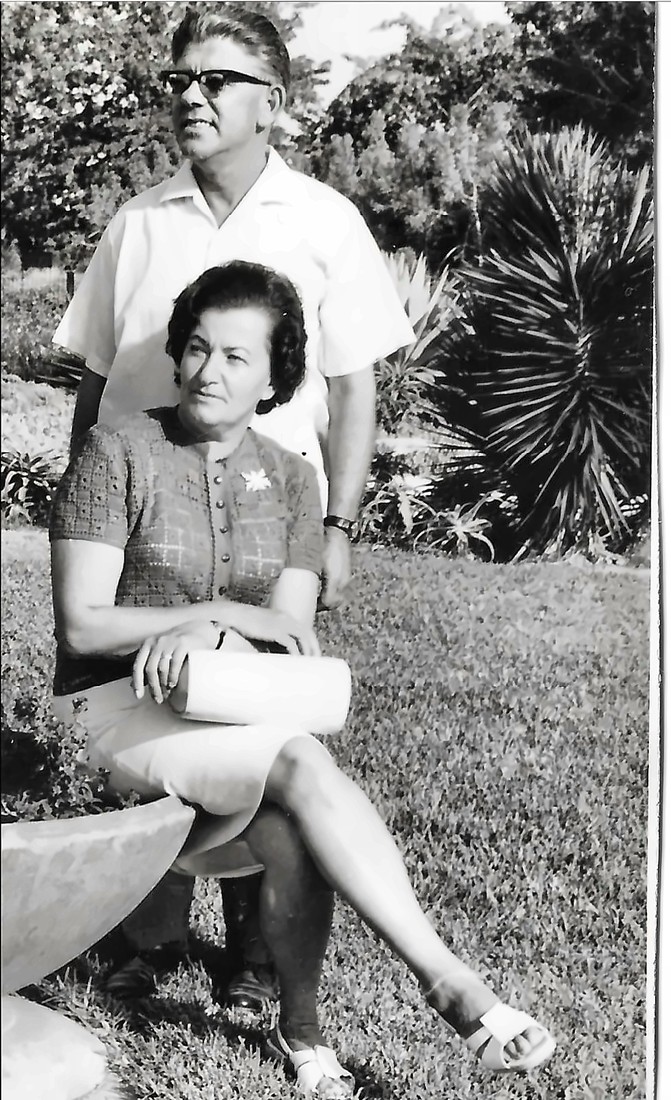
In closing: the relationship between my father and my mother was complicated, and the bond between them was strong. My father, it seemed to me, was grateful to my mother, and anyone who dared speak of her, even in a tone he found less than respectful, he would lash out at — whether at them, or at her. The two of them were symbiotic; my mother worried over him greatly, and the bond between them only grew tighter as they aged — especially, as I recall, once I was myself a grown woman.
XVI. The Secret
In closing: the secret.
My mother told my brother a secret when he was thirteen. She told him that our father had had a first wife, and two sons, who were murdered in the Holocaust. The story was told in an actual whisper, in secrecy.
In hindsight, my brother told me he had heard whispers about children, and had been sure he himself was adopted.
When I was twelve, my mother told me the secret!
I remember the expression on her face, beyond the words — as if this were something you simply didn't speak of. As if it were shame.
I, too, carried on the tradition, orally, without dwelling on it. Tal reacted with sensitivity, and when I told Nitzan, I said to her: I have a secret to tell you — and I told her. She looked at me expectantly. I asked if she'd understood what I'd told her. She said: yes — but where's the secret?
I remember the jolt that went through my head.
From that moment on, thanks to Nitzan's reaction, I began speaking about it openly. For a long time I felt guilty simply for having exposed the secret — and afterward, only regret that I hadn't asked more.